
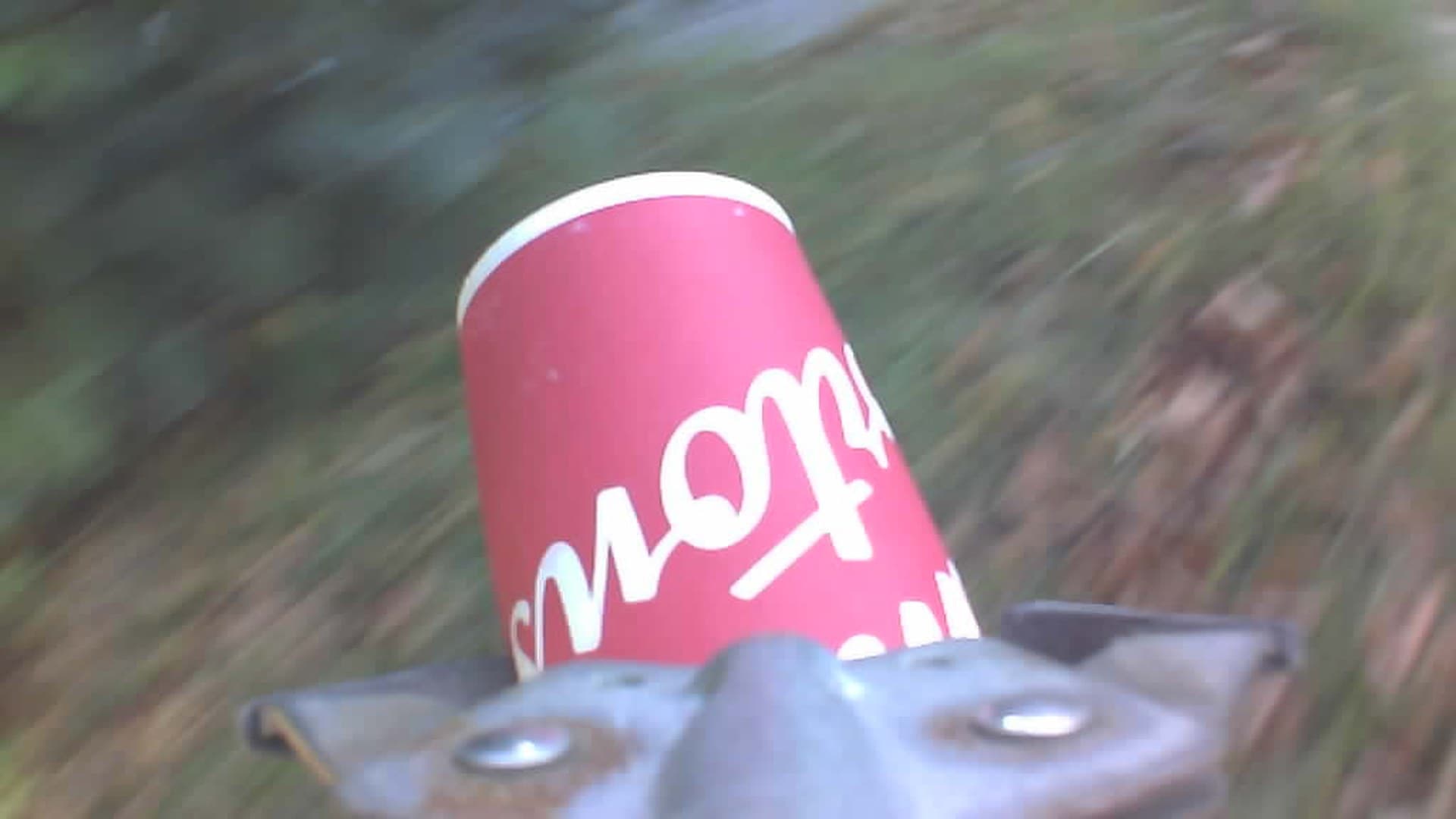
What the picker sees
A grabber that counts for you.
Today it is a camera on elastics.
A 21-gram camera strapped to the picker streams to the phone in your pocket, about two frames a second. The phone names what passes through the jaws and counts a pickup when it sees the bag. No buttons during a walk. Corrections happen afterwards, on the couch.
Numbers as of October 7, 2026, from walks the model had never seen. It is a classifier, not a miracle: clear plastic, paper, and lids still fool it.
13+
camera walks
Every frame reviewed by hand
803
pickups verified
The ground truth the model learns from
94%
of items spotted
On 8 walks it had never seen
36
model rounds
Each scored on an untouched walk
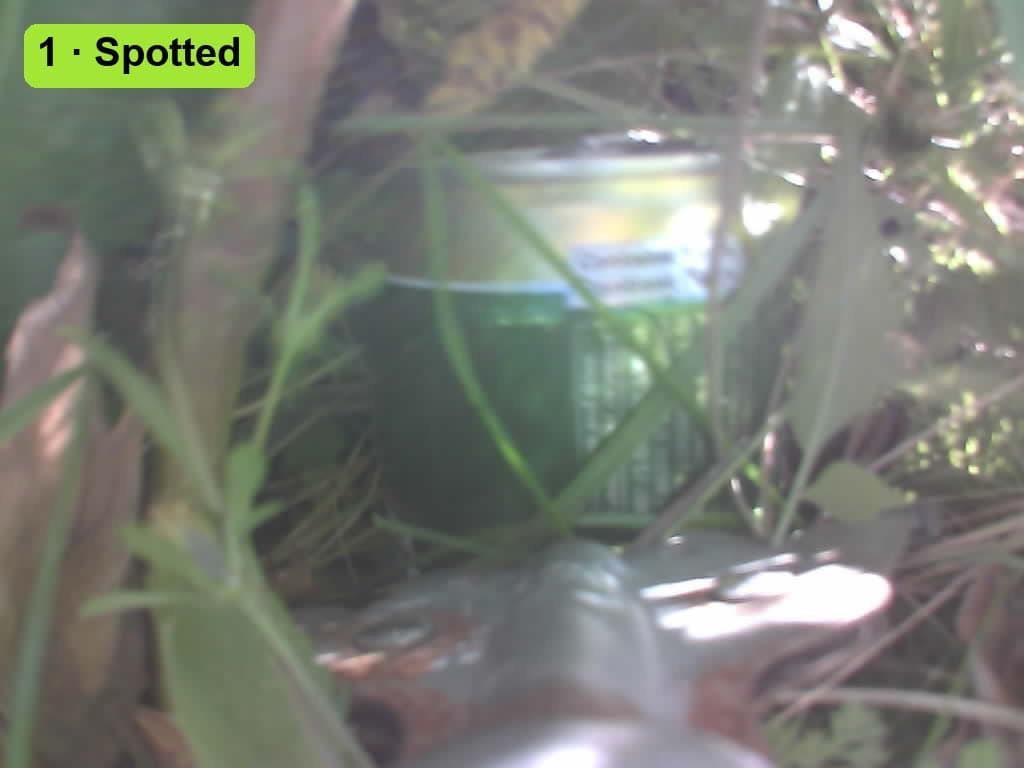 Spotted
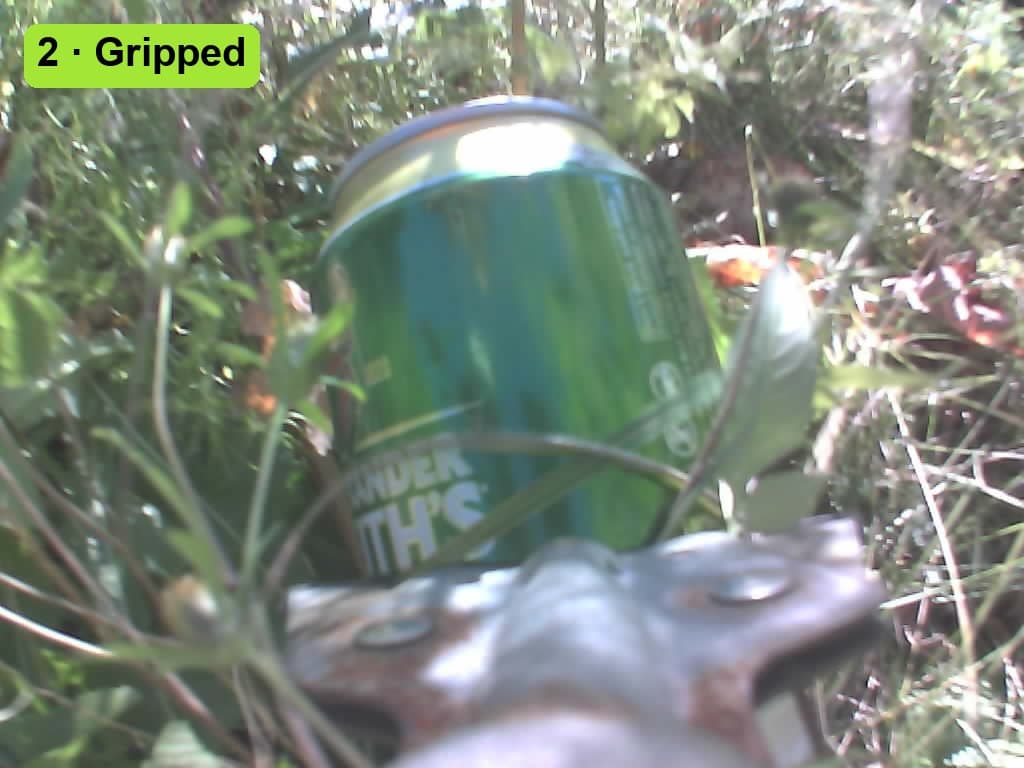 Gripped
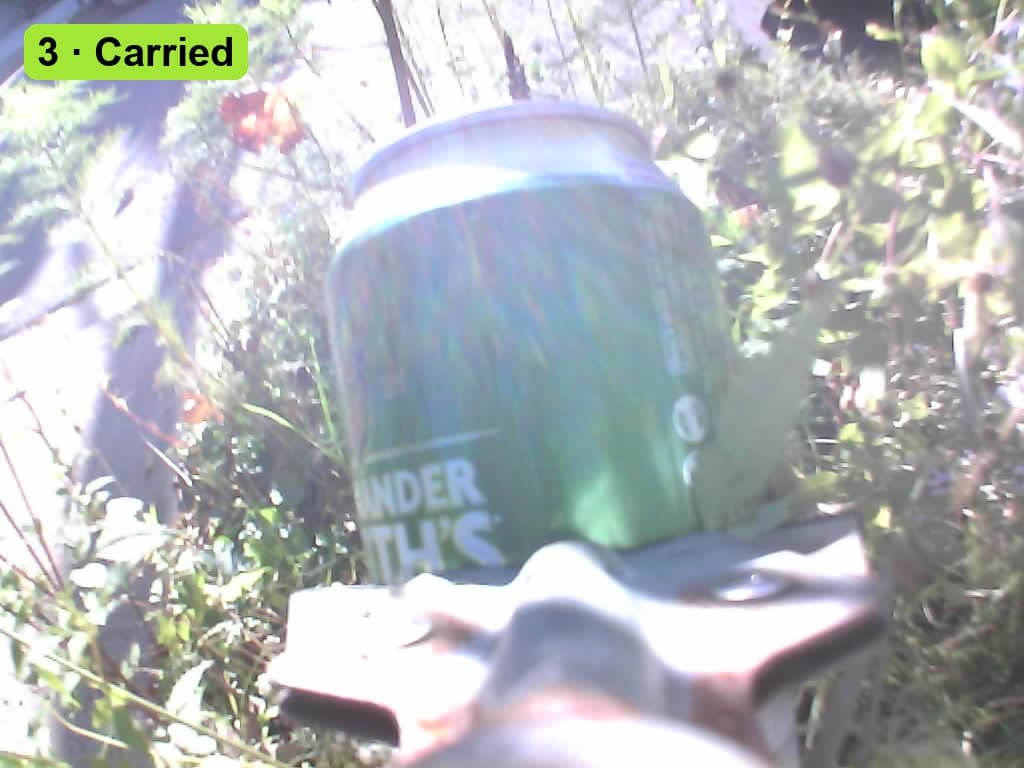 Carried
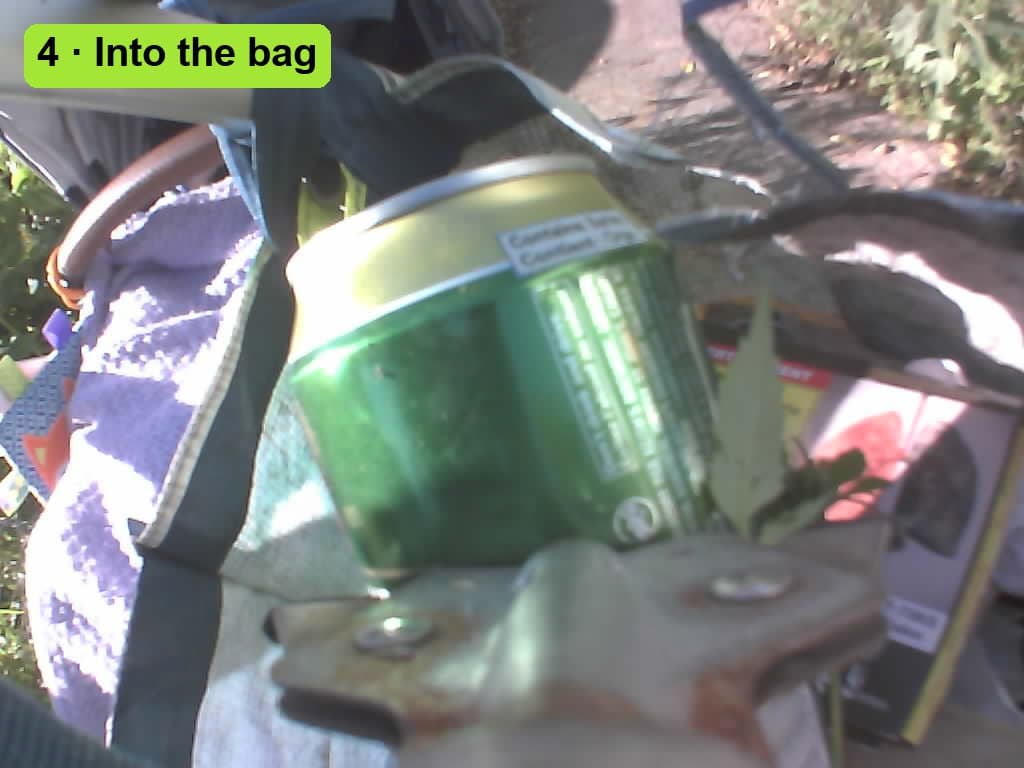 Into the bag, counted
One can, four frames, from a real Halifax walk on 7 October 2026. The fourth frame is the one that counts.
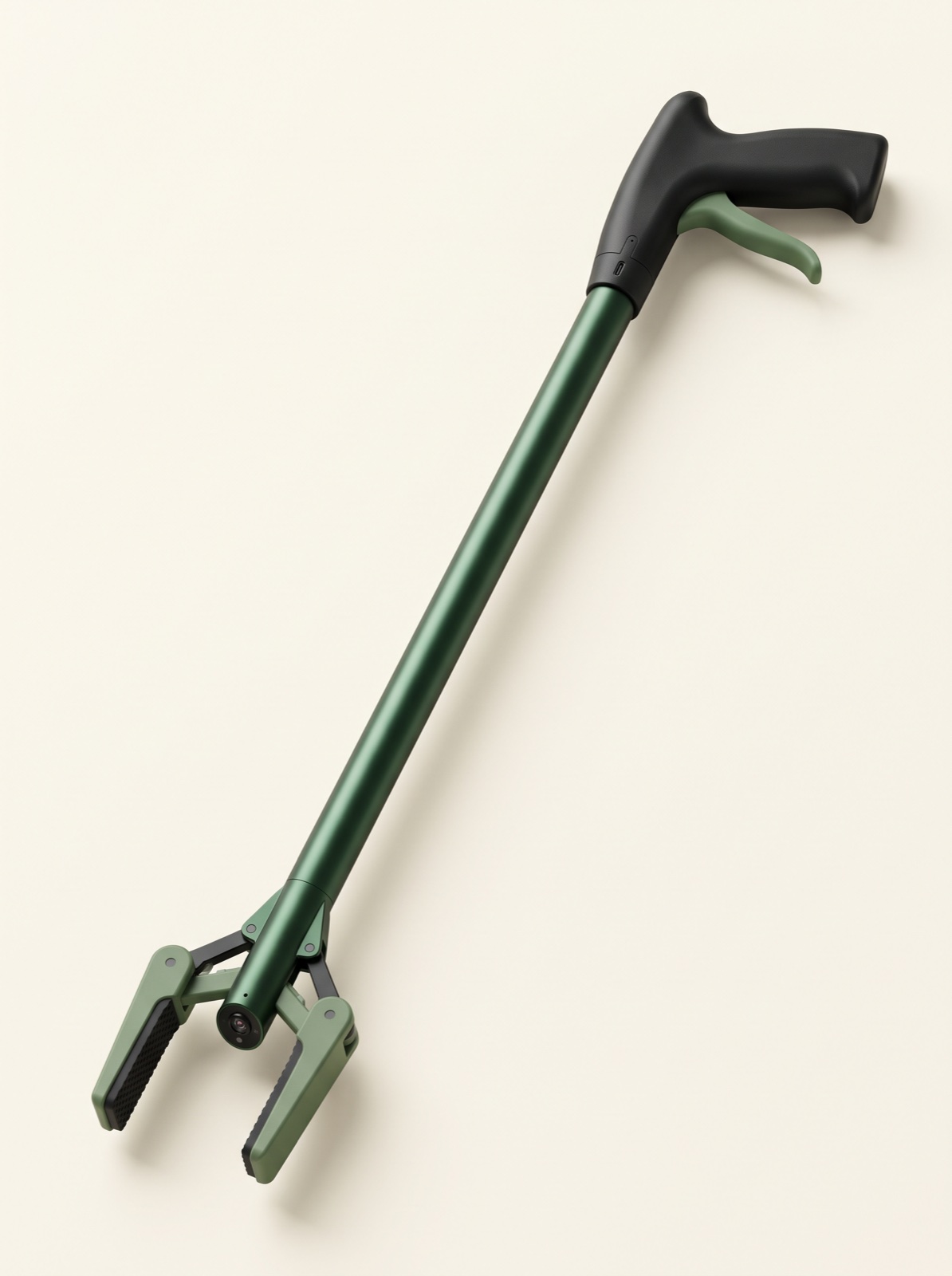 Camera in the shaft tip, looking out between the jawsBattery and wiring inside the hollow shaftRadio and SIM in the handle
Next, it is the Icky Picker.
The same grabber everyone already owns, same length, same squeeze. The camera is built into the shaft and looks out between the jaws.
A camera in the tip of the shaft
It looks out between the jaws at the ground. Squeeze the trigger and it fires a burst of photos of the trash you just grabbed. Nothing to aim.
A month on one charge
The battery and wiring live inside the hollow shaft. Charge it with the phone, once a month.
Its own line to World Litter Run
First over the phone in your pocket. Then, with its own SIM, the walk streams straight to the map while you are still out.
Pull it apart.
Every part of the prototype. Scroll, and it comes apart as it rises.
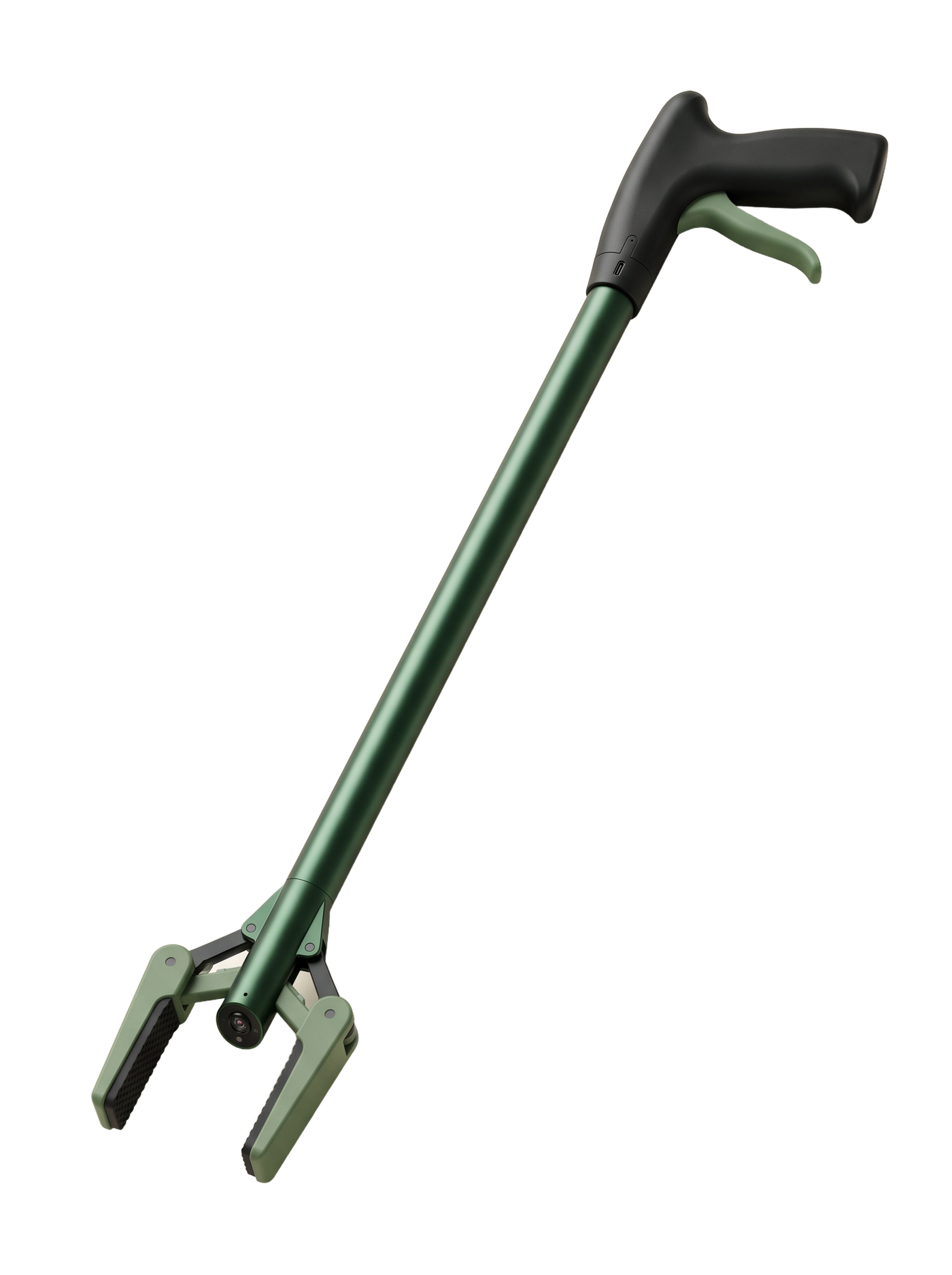
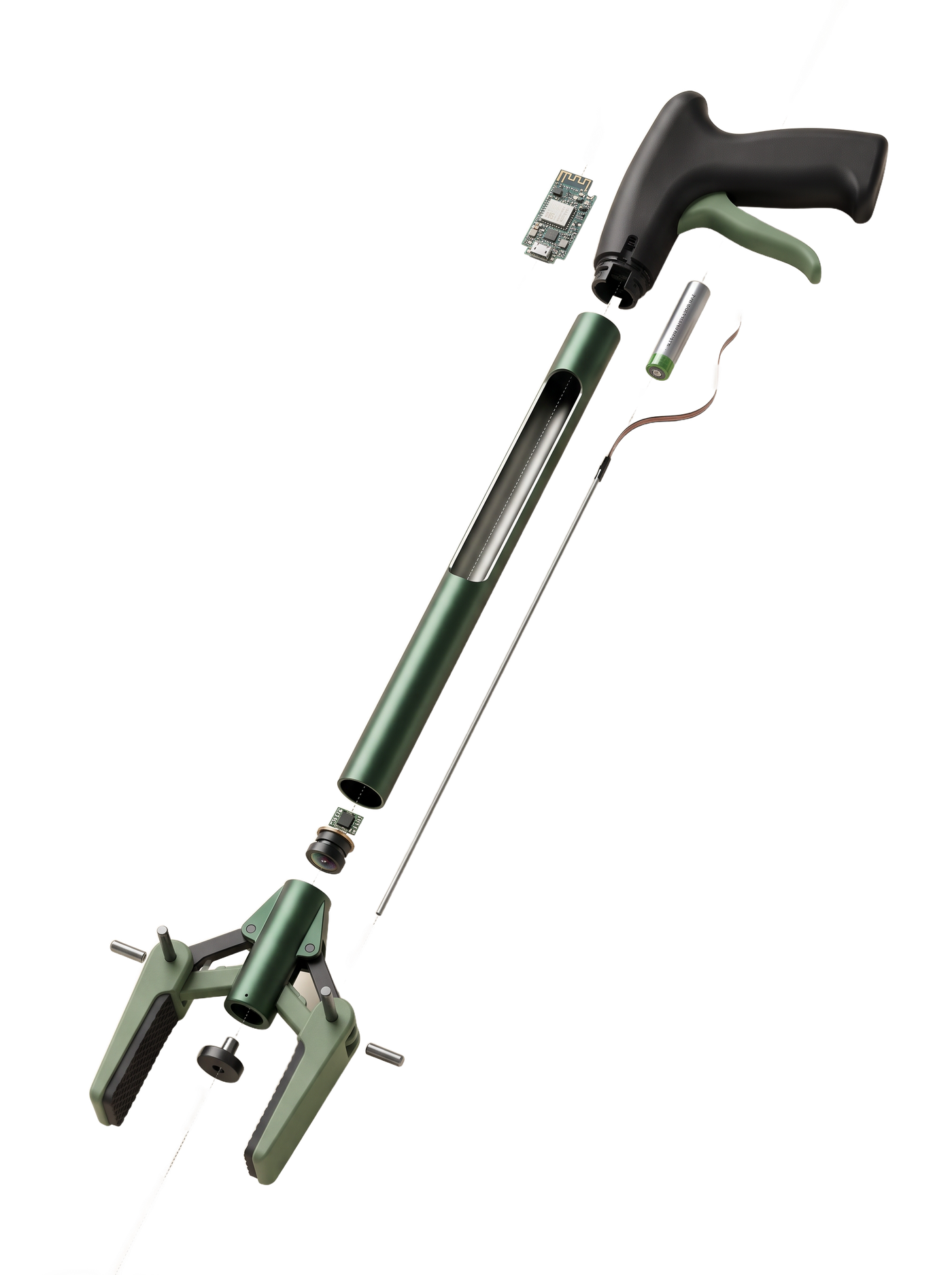
1Handle and trigger
A normal pistol grip. Every squeeze closes the jaws and fires a burst of photos of what is in them.
2Hollow shaft
Standard picker length. The battery and the camera wiring live inside, so nothing is strapped on.
3Pull cable
The same cable every grabber has, running from trigger to jaws.
4Camera
Set into the tip of the shaft between the jaws, pointing at the ground. It sees the trash the moment you grab it.
5Jaws
Ordinary grabber jaws with rubber pads. The sneakers are only on the shirt.
6Radio
A small board in the handle talks to the phone in your pocket. Later, its own SIM.
Keep scrolling.
Concept renders. The first working prototype is a camera strapped to a store-bought grabber; this is where it is going.
A walk, as the camera saw it.
Rendered on the phone from one afternoon walk on 1 October 2026: the reviewed pickups, the route, and lifetime totals at the end. Silent; turn on captions for a description of each card.
What surprised us
- Shoes, a clog, and a hand over the lens all looked like “the bag”.
- Doubling the resolution halved the frame rate for no gain.
- The right negatives beat more data. Count encounters, not frames.
How far we have got
9 Sep 2026
Firmware spec written for a 21-gram ESP32 camera. The camera is a sensor, the phone is the brain.
14 Sep 2026
First field walk in Halifax. The model fired on gravel, a shoe, and the picker itself. Reviewing is the product.
1 Oct 2026
First walk film rendered on the phone from reviewed pickups and the GPS route.
7 Oct 2026
Model round 36. 94% of items spotted on eight walks it had never seen.
14 Oct 2026
Shown at the Recreation Nova Scotia conference in Truro.
Next
A shaft with the battery inside and the camera between the jaws. Field walks, then a small Halifax batch.
What your money buys
Camera modules and lenses
Wide-angle sensors that sit between the jaws and survive rain.
A month of battery
A custom shaft with the cell inside, charged once a month over USB-C.
Field walks
Every walk is reviewed by hand, frame by frame. That review is what trains the next model.
A small Halifax batch
The first pickers go to the people on this list, built and tested here.
Every pickup the picker counts lands at World Litter Run, in the same tables and vocabulary as every other walk, and a human confirms every tag.
Want one?
The first batch is small and built in Halifax. Fund $500 and one of them is yours when they are made. Or leave your name and we will write when the picker is ready to order.